
If you receive SNAP benefits, or may be eligible, important changes are underway that could affect both your benefits and how the program is run in Massachusetts.
On July 4, the One Big Beautiful Bill Act was signed into law, making some of the most significant changes to the Supplemental Nutrition Assistance Program in decades.
The law tightens work requirements, limits benefit flexibility, and shifts more financial responsibility to states, changes that may be felt most acutely by older adults, caregivers, and people living on fixed incomes.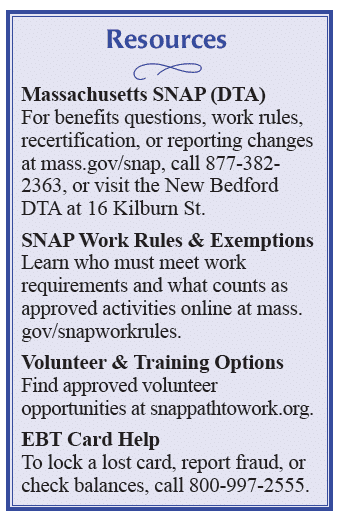
One of the most consequential changes for older adults is the expansion of SNAP work rules. Previously, work requirements applied to adults up to age 54. Under the new law, they now extend to age 64.
Adults without dependents, referred to as “ABAWDs,” must work, volunteer, or participate in an approved job training program for at least 80 hours per month to receive SNAP for more than three months within a three-year period. Each month of noncompliance counts as a strike, and after three strikes, benefits stop until eligibility is regained or the three-year clock resets.
In Massachusetts, that clock resets on Jan. 1, 2027. Until then, individuals who lose benefits due to noncompliance generally must wait for the reset unless they meet an exemption or successfully requalify. These rules took effect in July and apply both to new SNAP applications and to existing recipients at recertification.
For many older adults, complying with these requirements may be difficult. Health limitations, caregiving responsibilities, transportation barriers, and age-related discrimination in hiring can make steady participation challenging.
At the same time, the law sharply reduces states’ ability to waive work requirements in areas with limited job opportunities. Waivers are now allowed only when unemployment exceeds 10 percent, a level rarely reached. In addition, exemptions previously available to people experiencing homelessness, veterans, and former foster youth have been eliminated. Increased enforcement means more SNAP recipients will need to document work or approved activities to keep their benefits.
The law also limits how SNAP benefits can be adjusted. Going forward, benefit changes will occur only once a year, through the annual cost-of-living adjustment each October. This removes the federal government’s ability to make mid-year changes in response to rising food prices, supply disruptions, or other economic shifts, a concern for households already struggling to stretch food budgets.
Another change affects the replacement of stolen or lost SNAP benefits. Federal funding to replace benefits lost through EBT card theft or scams ended in December 2024, and states can no longer request reimbursement. Massachusetts officials are urging SNAP recipients to protect their cards by locking them when not in use. This can be done by calling the EBT customer service number, similar to locking a credit card, and unlocking it again when needed.
Eligibility rules for some non-citizens are also changing. Beginning in November, several humanitarian categories will no longer qualify for SNAP, including refugees, asylees, certain parolees, and individuals protected under VAWA provisions. Eligibility continues for lawful permanent residents, Cuban-Haitian entrants, and individuals lawfully present under the Compact of Free Association, which includes residents of Micronesia, the Marshall Islands, and Palau. These rules apply to both new applications and recertifications.
There have also been changes to how utility costs are calculated for SNAP purposes. Updates to the standard utility allowance may increase or decrease benefits depending on a household’s actual expenses, meaning some recipients could see adjustments that are not immediately obvious.
Beyond individual benefits, the law significantly affects how SNAP is funded and administered in Massachusetts, changes that may indirectly impact recipients. Federal funding for SNAP nutrition education programs has been eliminated. In Massachusetts, these programs are expected to continue only until existing funds are exhausted, anticipated by Sept. 30. These programs help people learn how to eat well on a limited budget and navigate rising food costs.
Administrative funding has also been cut. Previously, the federal government covered about half the cost of running SNAP. Under the new law, it will cover only 25 percent, leaving Massachusetts responsible for the remaining 75 percent. In addition, states must now contribute toward SNAP benefit costs if their payment error rates exceed certain thresholds, with required contributions ranging from zero up to 15 percent. This represents a new and potentially significant expense for the state.
Taken together, these changes make SNAP more rigid and less forgiving, while placing new financial pressures on states. For older adults, especially those nearing retirement or managing health challenges, the stakes are higher. While the full impact will unfold over time, staying informed, reporting changes promptly, and seeking guidance about exemptions or approved activities will be more important than ever.
If you receive SNAP, continue using your benefits as usual, but pay close attention to mail, notices, and recertification deadlines from the Department of Transitional Assistance.
If you are between ages 55 and 64, or your work situation has changed, ask DTA whether the new work rules apply to you and whether you qualify for an exemption or approved activity such as volunteering.
Protect your EBT card by locking it when it’s lost or not in use, and report changes in health, income, or household status promptly. If you are unsure how these changes affect you, reach out to a trusted benefits counselor, council on aging, or community organization for help navigating your options.
Recent Comments