
At the Acushnet Senior Center, a new kind of gathering is taking shape, one built not around activities or meals, but around listening, sharing, and finding connection.
For older adults who say the hardest part of aging is not aches and pains but the silence of an empty house, the Loneliness & Isolation Support Group offers a chance to rediscover community.
A recent National Poll on Healthy Aging found that one in three adults ages 50 to 80 sometimes or often feel lonely, isolated, or lacking social contact. Many said they can go a week or longer without meaningful interaction outside their home. That number is lower than the nearly half of older adults who reported loneliness in June 2020, but it remains higher than pre-pandemic levels.
In 2023, U.S. Surgeon General Dr. Vivek H. Murthy went further, calling loneliness and social isolation an epidemic. On a listening tour across the country, he heard stories from people of all ages who felt invisible.
“People began to tell me they felt isolated, invisible, and insignificant,” Murthy wrote. “Even when they couldn’t put their finger on the word ‘lonely,’ time and time again, people of all ages and socioeconomic backgrounds, from every corner of the country, would tell me, ‘I have to shoulder all of life’s burdens by myself,’ or ‘if I disappear tomorrow, no one will even notice.’”
For Alexa Moniz, MSW, LICSW, a social worker who counsels older adults in Acushnet and other communities, the reality of loneliness was impossible to ignore.
“This was the primary issue that was coming up. On intake, this is what people were reporting,” she said about her therapy work. “It’s making them feel anxious and depressed.”
While individual therapy helped, Moniz saw the need for something more, something that would allow older adults to come together and find community. She approached Acushnet Council on Aging Director Lauren Golda with an idea, and the Loneliness & Isolation Support Group was born.
The six-session program launched in September and runs through Dec. 9. Sign-ups remain open, with Moniz recommending that participants join by the second session on Oct. 7. Insurance coverage is available, and interested adults can connect with Moniz for details.
Moniz has two central goals for the group. First, she hopes to raise awareness about how deeply loneliness impacts older adults.
“I would love for the community in all generations to be more aware of loneliness,” she said. “I know group members so far have expressed wanting to have their families know how impactful it is and to figure out, within the group, how we can communicate this to their family members.”
Her second goal is to help participants rediscover community and make new friends.
“People need a sense of community and people that they can relate to … that they can talk about their experiences with loneliness and then also develop support. Like, (for example), let’s connect these lonely seniors with other lonely seniors,” Moniz said.
The people joining the group come from different circumstances. Some are widowed. Others no longer drive. Many live alone, and even those who don’t, still experience loneliness.
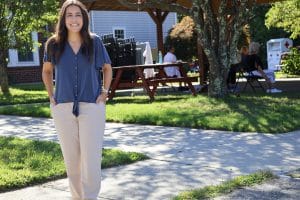 “They don’t see their family because the family doesn’t come visit them and mobility is harder for many of them,” Moniz explained. “They want to be able to relate to other people who are feeling the same way. They feel just empty and being home in an empty house makes them feel more so.”
To support them, Moniz uses therapeutic strategies such as reframing negative thoughts and building healthier perspectives. She believes today’s older adults are increasingly open to this kind of work.
“Seeking help can be something that this generation hasn’t normally done in the past because mental health has had a stigma behind it,” she said. “So, seeking help is not always their first step. I think it’s great though. The seniors are seeing, whether it’s at the Senior Center or wherever, they’re seeing that there is help.”
October brings added visibility to that message. Since 1990, the National Alliance on Mental Illness has designated Oct. 6–10 as Mental Illness Awareness Week, and Oct. 10 is recognized globally as World Mental Health Day. This year’s theme, One in Mind, highlights that mental wellbeing connects people across ages, locations, and roles. “Everyone deserves compassion, support and the tools to thrive,” notes the National Council for Mental Wellbeing.
That’s exactly what Moniz hopes her group will provide.
“On an individual level, my goal is for people to be able to know that loneliness is a subjective feeling. It’s not about how many people you surround yourself with, it’s more about how you deal with it and how you reframe the situation,” Moniz said. “We talk a lot about positive reframing and even though you’re in an empty house, how can you make yourself feel not lonely.”
Surgeon General Murthy agrees that connection is within reach.
“Each of us can start now, in our own lives, by strengthening our connections and relationships,” he wrote. “Our individual relationships are an untapped resource—a source of healing hiding in plain sight. They can help us live healthier, more productive, and more fulfilled lives.”
Golda sees the group as another way the Senior Center can connect residents to resources.
“I think the more that we get the seniors in and talking, it opens other doors too,” she said. “If somebody comes in with the outreach specialist, for example, and wants help with fuel assistance or something like that, it could lead to them expressing that they don’t have supports in the community … and then Pat and Sam, our two outreach specialists, can refer them to Alexa as well.”
For Moniz, the hope is simple: to help people move from isolation to community.
Recent Comments