
Hundreds of older adults filled the Great Hall at the State House in May to let legislators know that despite threats to funding at both the state and federal level, they deserve to age with dignity and they will advocate to support better funding for aging services and programs like home care, nutrition, and housing.
Speaking before the 500-plus attendees, Mass Aging Access Executive Director Betsey Crimmins acknowledged the uncertain funding landscape and the need for future difficult decision-making by state leaders. MAA is the nonprofit membership association of the 27 Aging Services Access Points and Area Agencies on Aging in Massachusetts.
But there is no uncertainty that aging services programs save the state money, she said.
“We know that home-based ser-vices save money,” said Crimmins. “We know that you do not save money by cutting these services, especially for older adults who’ve been found eligible for nursing homes. We know that you don’t save money by cutting nutritious meals for older adults who can no longer prepare or shop for meals, who are malnourished and who are hungry.”
“We know that you do save money by supporting older adults from returning home from hospitals with the services they need, that avoids expensive nursing home care and allows people to remain active in their own communities,” Crimmins continued.
Beyond services, Older Americans Month in May is an opportunity to flip the script on aging, Betsy Connell, executive director of the Massachusetts Councils on Aging statewide organization, said.
“We are all being called on to challenge outdated stereotypes, dismiss myths, and celebrate aging, not as decline, but as a continued journey of growth, strength and purpose,” Connell said.
 Connell also acknowledged the uncertainty facing older adults and aging organizations.
“The landscape of aging ser-vices is shifting and not always in a way that supports the dignity and well-being of our older adult population,” she said. “Federal cuts to senior nutrition programs, reduction in SNAP benefits, and increasing barriers to access Social Security assistance are not just policy issues, they are life issues impacting food security, health, housing stability and independence. There are a lot of unknowns, leaving many older adults anxious, and rightly so.”
This is where municipally-based councils on aging can help, Connell stressed.
Senior Centers “are the safety net in the community,” she said. “They’re the hand on the shoulder of an older adult in need and the voice on the other end of the line, and sometimes they’re the only connection someone may have.”
Hyannis resident, Patty Ericson-Taylor 62, was at the State House to support better accessibility for people with disabilities and to advocate for better funding for aging adults. Ericson-Taylor uses a wheelchair after experiencing a hemorrhagic stroke in 2021.
“When I remembered what happened, I said I’m going to make a difference in this world,” she said about her stroke experience.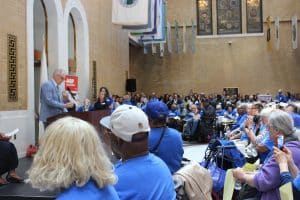
She was at Lobby Day, she said, “to speak up because they should not be cutting money for seniors. We worked all our lives for what we deserve and now they’re cutting for seniors and it’s not OK.”
Recent Comments