
Massachusetts is launching a statewide Anti-Hunger Task Force to address the growing food insecurity faced by elders and families, the governor announced in July.
A public-private partnership, the task force will bring together leaders from state and local government, food banks, non-profits and business leaders, as well as those who are directly impacted by food insecurity, such as SNAP recipients, farmers and small business owners.
Task Force members will advise Gov. Maura Healey and make recommendations on how Massachusetts can mitigate federal funding cuts to SNAP and other food assistance programs as well as adopt long-term solutions to hunger.
Organizations participating include the United Way, Greater Boston Food Bank, and Project Bread.
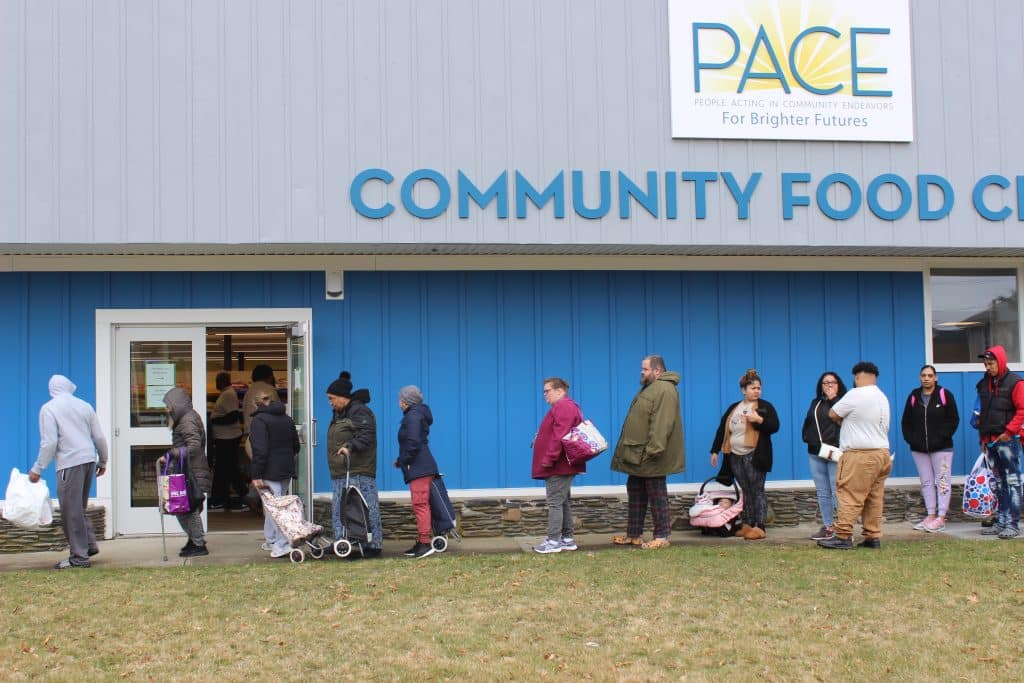
PACE Executive Director Pamela Kuechler will serve on the group, providing local representation. PACE is one of several South Coast organizations addressing food insecurity in the region. The organization operates a food bank at 477 Park St. in New Bedford serving New Bedford, Dartmouth, Marion, Rochester, Mattapoisett, Fairhaven and Acushnet residents.
“We are definitely seeing an uptick in the number of people who are challenged by the affordability of food and all of things that go with it,” Kuechler told Senior Scope.
PACE’s Food Bank, she said, is already on track to serve 15,000 households this year, up from 10,000 last year, and expects to see that rate continue to increase with the loss of food-related federal funding.
“We’re really just concerned about the attack on safety net programming for folks who struggle and what is going to happen if the safety nets don’t exist,” she said.
Currently, PACE’s CDBG, Community Development Block grant, which supports its community work in several ways including food and heating funding, is not in the president’s budget, Kuechler said.
“We are working hard to try to educate people to what that grant does,” she added.
In its announcement, the state said creating the task force comes in response to the recent federal law that “cuts SNAP benefits, imposes new and burdensome eligibility requirements, and fundamentally alters its cost-sharing partnership with the states.”
The cuts will hurt Massachusetts residents who rely on SNAP to put food on their table and hurt farmers and small businesses by taking business away from them.
Exacerbating the issue were earlier cuts that reduced access to healthy food in childcare programs and schools and made significant reductions to programs that provided food to food banks and purchased food from local farmers to provide healthy local food to families in need.
About one in three Massachusetts households experienced food insecurity in 2024, according to the Greater Boston Food Bank’s recently-released Cost of Hunger in Massachusetts 2025 report. Rates of hunger in Massachusetts have steadily risen over the past five years, growing from 19 percent in 2019 to 37 percent in 2024.
The task force will work in coordination with existing food security initiatives in Massachusetts, the state said, including Make Hunger History, a statewide, cross-sector initiative of 300-plus organizations led by Project Bread to create a coordinated, community-informed roadmap to end hunger in Massachusetts.

The PACE Food Bank is set up in the style of a grocery store to allow people to choose what they need.
“Access to nutritious food is essential for healthy aging, and these cuts threaten the well-being of thousands of older adults across Massachusetts,” said Secretary Robin Lipson, Office of Aging and Independence. “Decreased funding of SNAP benefits, coupled with the increased cost of food impacting programs like Meals on Wheels and Congregate Meals, will make it harder for many to access food.”
The PACE Food Bank is open five days a week from 10 a.m. – 2 p.m. on Monday-Wednesday and Fridays, according to the PACE website. Thursday hours are 2-7 p.m. An application must be completed to shop for food. Sign up online at https://toapply.org/PACE
Recent Comments