
After more than five decades working in housing and community initiatives, Ellen Bruder-Moore Abramowitz continues to focus on a central question: what does it take for people to grow older safely and with stability in places they can call home?
Now 70, Bruder-Moore Abramowitz serves as vice president of Housing and Community Initiatives at Community Counseling of Bristol County. Her work has spanned the country, from early efforts in New Jersey supporting people leaving state hospitals to developing permanent supportive housing across Massachusetts.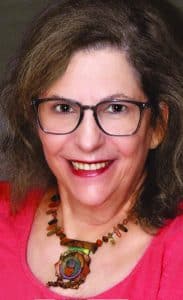
She was recently recognized by the Bristol County Continuum of Care, which presented her with its 2025 Sister Rose Award. The award honors Sister Rosellen Gallogly, a longtime leader at Market Ministries and a founding member of the city’s Homeless Service Provider’s Network.
Pamela Kuechler, chair of the Bristol County Continuum of Care, presented the award at the group’s Feb. 19 meeting, highlighting Bruder-Moore Abramowitz’s long-standing impact.
“Ellen Bruder-Moore Abramowitz has served and provided social services across the country for over 50 years and throughout the Bristol County area for 20 years, pushing communities to see the struggles of those experiencing housing crisis and advocating for empathy and change,” she said.
Bruder-Moore Abramowitz began her career while still in college, working at Rutgers Mental Health Center in New Jersey.
“I was a counselor at a community mental health center at Rutgers Mental Health Center in New Jersey and I started working with folks coming out of state hospitals. These are folks who had been institutionalized for years and basically were learning for the first time what it was like to live in the community,” she said.
Her work focused on helping people secure housing while also providing on-site support.
“I was advocating for folks to be able to live on their own with support, with care coordination, (and) case management support.”
From the beginning, she saw housing as the foundation for stability, a perspective shaped in part by ongoing debates with her late husband, Mark Moore, who worked in employment services.
“I always focused on where are they going to put their head at night, where are they going to sleep, because many people became homeless,” Bruder-Moore Abramowitz said. “They got out of being in a state hospital and they never had a place to really live, if they weren’t in a halfway house.”
“And he and I would fight all the time, which should come first, the job or the place to live. And I would say, ‘If you don’t have a place to take a shower, put your head at night, get up and go to work, and he would say, ‘But how are you going to pay for it?’”
That philosophy continued to guide her work as she moved to Massachusetts, where she helped develop licensed housing through the Department of Mental Health, the Bureau of Substance Addiction Services, and the U.S. Department of Housing and Urban Development.
She helped establish permanent supportive housing programs in Bristol County, a model that combines housing with ongoing services.
“Basically it was my mantra,” Bruder-Moore Abramowitz said. “Help people get into housing. Help people get to a place they feel safe, and then you begin to engage them around their mental health, or their substance use.”
Many of those served through these programs are now older adults who were once chronically homeless.
“The majority of people we serve in permanent supportive housing are older adults,” she said. “Because we housed them and then we kept them housed. They were chronically homeless over a year, out in the streets, in tents, you know, in their cars and these people are over 50 years old now.”
Much of that housing is supported by federal subsidies, which she said are now at risk. Massachusetts has joined other states in legal action challenging recent federal housing policies.
“If we don’t have the subsidy for them and they take it away from us now, the folks are looking me in the eyes saying, ‘I’m going to die, you know, if you don’t continue to help me stay housed,’” she said. “So we’re fighting this.”
Among the projects she points to is the conversion of a former nursing home in Dighton into 10 apartments for residents age 55 and older, with shared spaces and supportive services.
“It’s completely focused on older adults and what we do is provide case management, groups, and group clinical support,” she said.
In addition to housing development, Bruder-Moore Abramowitz oversees the Behavioral Health Outreach for Aging Populations (BHOAP) program across much of Bristol County. Through that work, she has seen firsthand the role coordination plays in helping older adults remain stable.
“I think that there needs to be what I call care coordination, and there’s not enough of it. Somebody who’s aware of what’s going on with this person and connecting with them and making sure they are getting to their appointments and helping them,” she said. “So having either a peer specialist, a care coordinator, or someone in that person’s life to call them, stop there, connect with them and make sure that they’re not being taken advantage of, make sure that their bills are being paid and make sure that there’s food on the table. A care coordinator is a critical role.”
She continues to work on housing efforts, including a new project in Taunton, and emphasized the importance of partnerships in making them possible.
“I think one of the most important things is to work with the business community,” she said. “I’ve been really surprised by some of the folks who have stepped up in the community. And I think we need to do more education of the business community so they will work side by side with us and so that we’re not working at odds with each other in this country right now.”
Recent Comments